









Injection Moulding Process Control: Hot Runner vs Cold Runner Systems
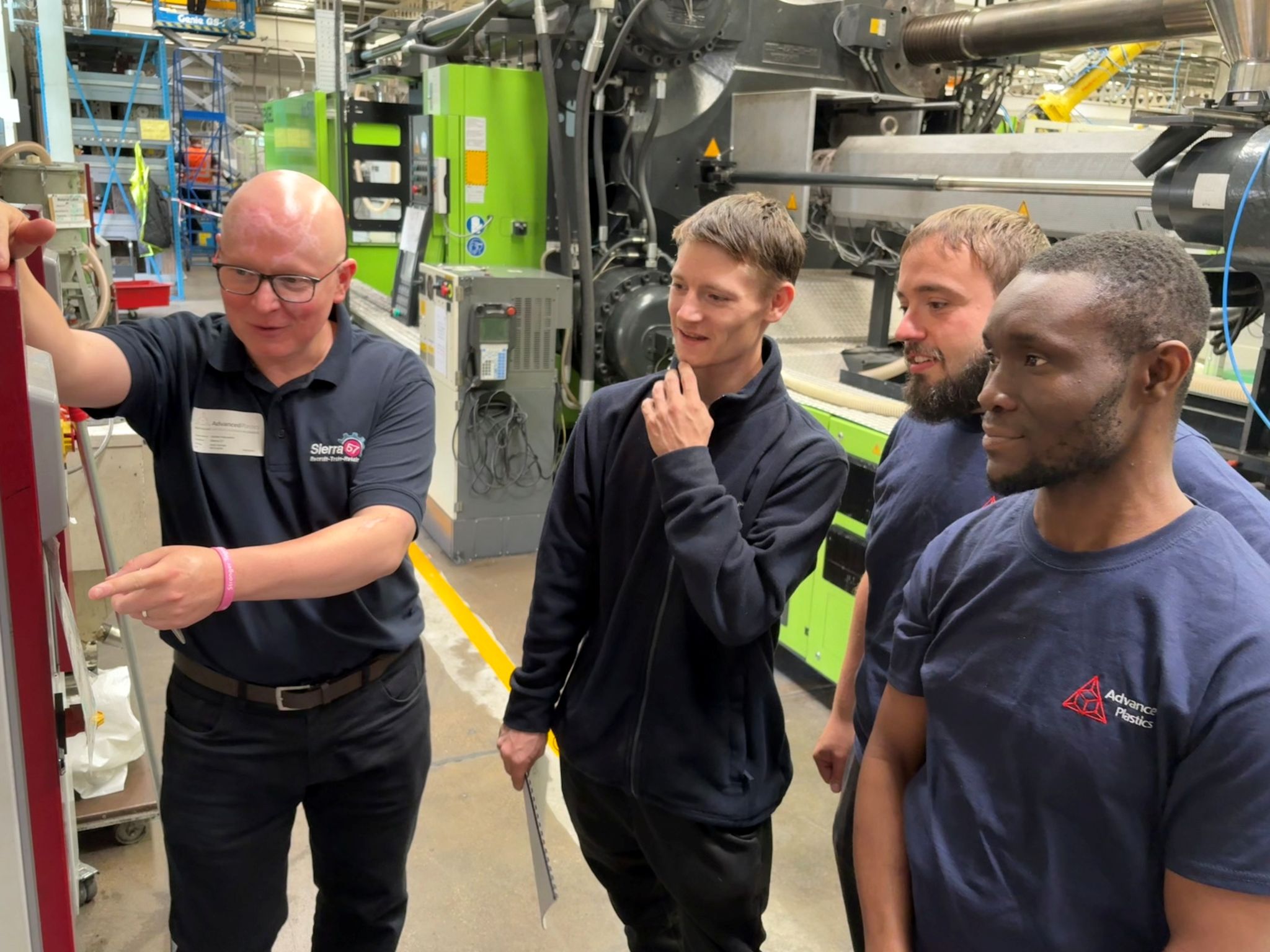
The day-to-day experience of the team at Sierra 57 Consult, working directly with machines, tooling and manufacturing partners, provides rare real-time visibility into the factors that shape injection moulding performance.
This practical expertise goes far beyond operational know-how. It helps bridge the gap between engineering theory and real-world production, demystifying complex manufacturing processes and helping technicians understand how design decisions impact long-term results on the shop floor.
Here, James Hayward explores a topic that frequently sparks debate in the plastics industry: process control in injection moulding, specifically the role of hot runner vs cold runner systems.
“At Sierra 57, we spend a significant amount of time – both in the classroom and on the shop floor – discussing what we often call ‘The Great Runner Debate.’
But this discussion goes far beyond the cost of the steel. The real issue is how much control you truly have over your injection moulding process – from part consistency and material waste to process optimisation and long-term production stability. Let’s explore in more detail…”
Cold Runner Systems: A ‘Locked-In’ Process
With cold runner systems, particularly in multi-cavity or family mould tools, the injection moulding process is fundamentally governed by runner geometry.
If flow balance is not correctly engineered into the tooling design, there is very little a technician can realistically adjust at the press to compensate. Unlike many other process variables, runner imbalance cannot simply be tuned out through machine settings or optimisation techniques.
This is why tool design is critical.
If the runner system is not balanced in the steel from the outset, achieving a stable and repeatable moulding process becomes extremely difficult. In many cases, the success or failure of a cold runner mould is decided long before the tool ever reaches the machine.
Hot Runner Systems: Flexibility vs the ‘Band-Aid’ Trap
Hot runner systems provide a level of process flexibility that cold runners cannot offer. However, this flexibility can sometimes create new challenges.
Too often, individual hot runner temperature zones are adjusted to compensate for poor tooling design or fundamentally unbalanced flow paths. When this happens, a powerful system designed for precision control becomes a short-term workaround rather than a long-term solution.
Another common misconception is that the hot runner controller is simply auxiliary equipment that keeps the plastic molten.
In reality, the hot runner system is a critical component of the injection moulding process, influencing:
- Melt quality
- Flow balance
- Shot-to-shot repeatability
- Overall process capability
If hot runner zones are not established using scientific moulding principles and controlled with the same rigour as barrel temperatures, the process will struggle to achieve true capability.
Used correctly, hot runner systems enhance process stability and control. Used incorrectly, they often become little more than a Band-Aid applied to deeper design and process issues.
The Sierra 57 Perspective
At Sierra 57 Consult, our position is simple: Flexibility is a tool – not a cure for bad physics.
Whether you are running a simple cold runner mould or a complex 32-drop hot runner system, the objective remains the same: Achieve a balanced fill through intelligent tooling design – not by “cranking up the heat” on Zone 4.
A Question for the Industry
From your experience in injection moulding operations, what do you see more often?
1) Tools designed correctly and balanced from day one
2) Technicians using the hot runner controller to force an unbalanced tool to run
We’d be interested to hear your thoughts…